Most people hear “self-abuse” and picture visible physical harm. That’s one form of it, but self-abuse often looks much quieter. It can hide in everyday habits we’ve normalized, or even been praised for.
Be honest: how often are you your own harshest critic? Over time, that inner hostility can harden into patterns that drain your energy, pull you away from people, and keep your nervous system stuck in survival mode.
What Does Self-Abuse Look Like? 8 Hidden Signs
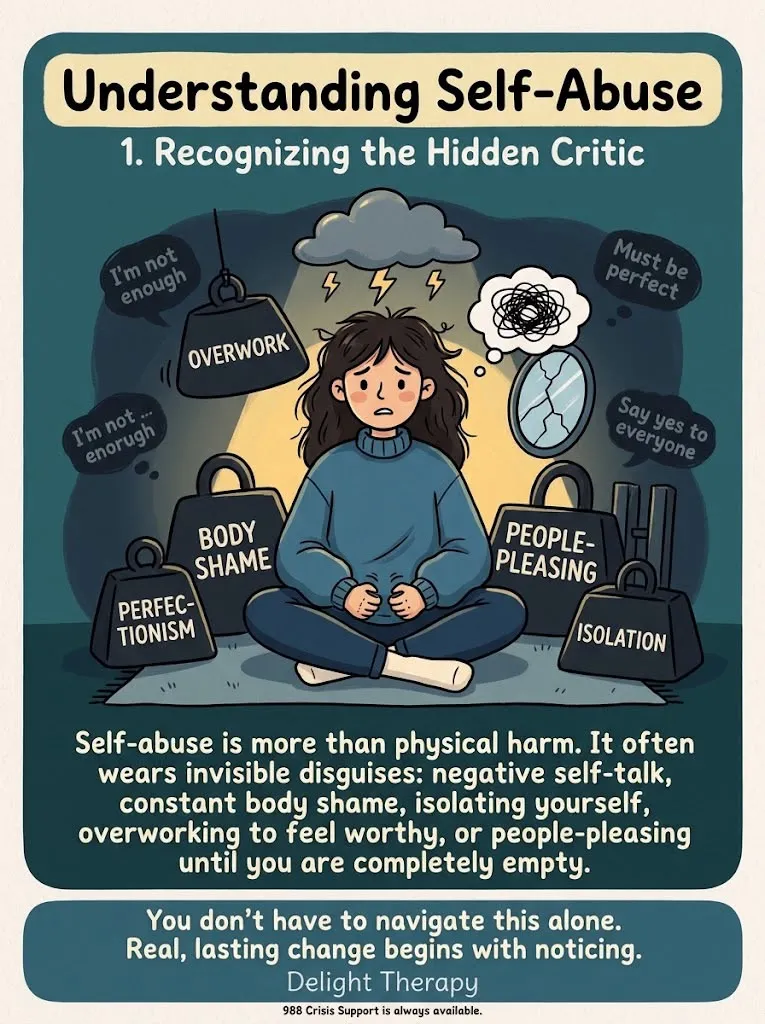
Self-abuse rarely announces itself. It often wears the costume of discipline, high standards, or “just being helpful.” Here are the most common signs:
- Negative self-talk: Berating yourself, replaying every small mistake, or holding yourself to standards you’d never expect of someone you love.
- Body shame: Ignoring or punishing your body, or treating it like an enemy to control instead of a home to care for.
- Overworking and burnout: Tying your worth to productivity and refusing to rest until you collapse, as if exhaustion could prove you’re “enough.”
- Chronic people-pleasing: Saying yes when you’re drained, swallowing your opinions, and dropping your needs to avoid rejection.
- Isolation: Pulling away from friends, family, or support exactly when you need them most, often because you feel like a burden.
- Disordered eating and compulsive behaviours: Using food restriction, bingeing, endless screen time, shopping, or rigid routines to feel in control or to numb big feelings.
- Risky behaviours: Making impulsive choices with your health, money, or safety when you feel numb, hopeless, or cut off from your future.
- Physical self-harm: Turning intense emotional pain onto the body when feelings become too heavy to carry alone.
Why Do We Hurt Ourselves This Way?
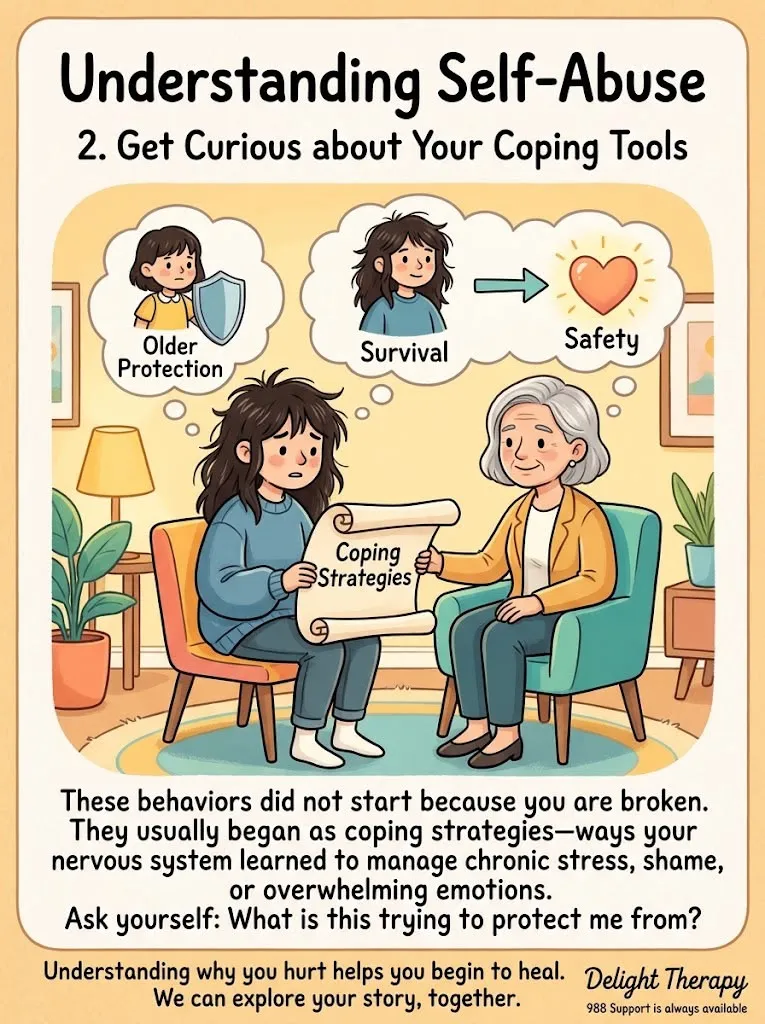
If you saw yourself in more than one of those signs, pause before you judge yourself. These behaviours don’t mean you’re broken or weak.
Most of them began as coping strategies. When you’re dealing with chronic stress, unresolved trauma, deep shame, or overwhelming emotions without safe tools or support, your nervous system grabs whatever helps you survive the moment.
- Overworking may have protected you from criticism.
- People-pleasing may have kept relationships steady.
- Numbing out may have been the only way to turn down pain that felt unbearable.
Once you understand what a behaviour is doing for you, the question changes. Instead of “What is wrong with me?”, you can ask, “What is this trying to protect me from?”
How to Move From Self-Punishment to Self-Awareness
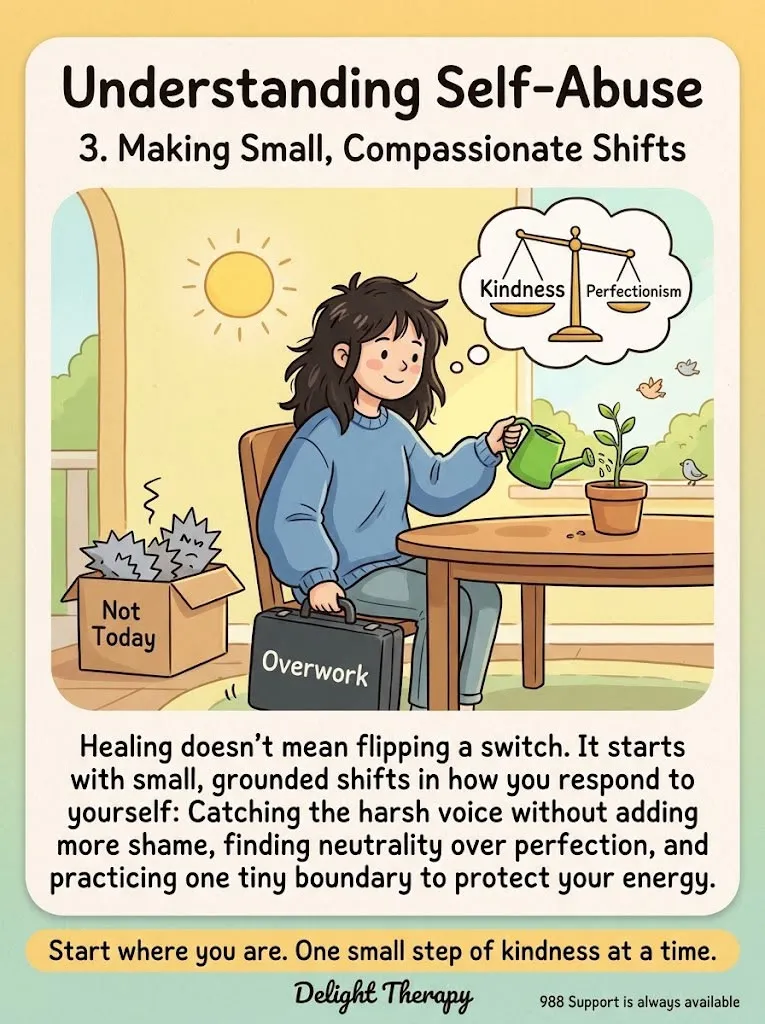
Healing doesn’t happen overnight, and it doesn’t mean forcing yourself to feel positive all the time. It starts with small, steady shifts in how you respond to yourself when things get hard.
1. Notice without adding shame.
Catch the harsh voice or the compulsive urge, and don’t punish yourself for having it. Just name it: “That’s my inner critic talking” or “I’m feeling the urge to overwork again.” That small gap between feeling and reaction gives you room to breathe.
2. Get curious about the trigger.
When you feel pulled toward isolation, body shame, or numbing, check in with yourself. Are you tired? Lonely? Afraid of letting someone down? What do you actually need right now?
3. Aim for neutrality, not perfection.
If self-love feels too far away, skip it for now. Start with basic respect. You don’t have to love your body or your life today to eat a nourishing meal, leave work on time, or take one deep breath.
4. Practice one small boundary.
If you tend to people-please or overwork, start with something low-stakes. Try saying, “Let me check my schedule and get back to you,” instead of an automatic yes.
5. Let safe people in.
Self-abuse grows in secrecy and isolation. Sharing even one small piece of what you’re carrying with a trusted friend or therapist can start to break the cycle of shame.
You Don’t Have to Punish Yourself to Grow
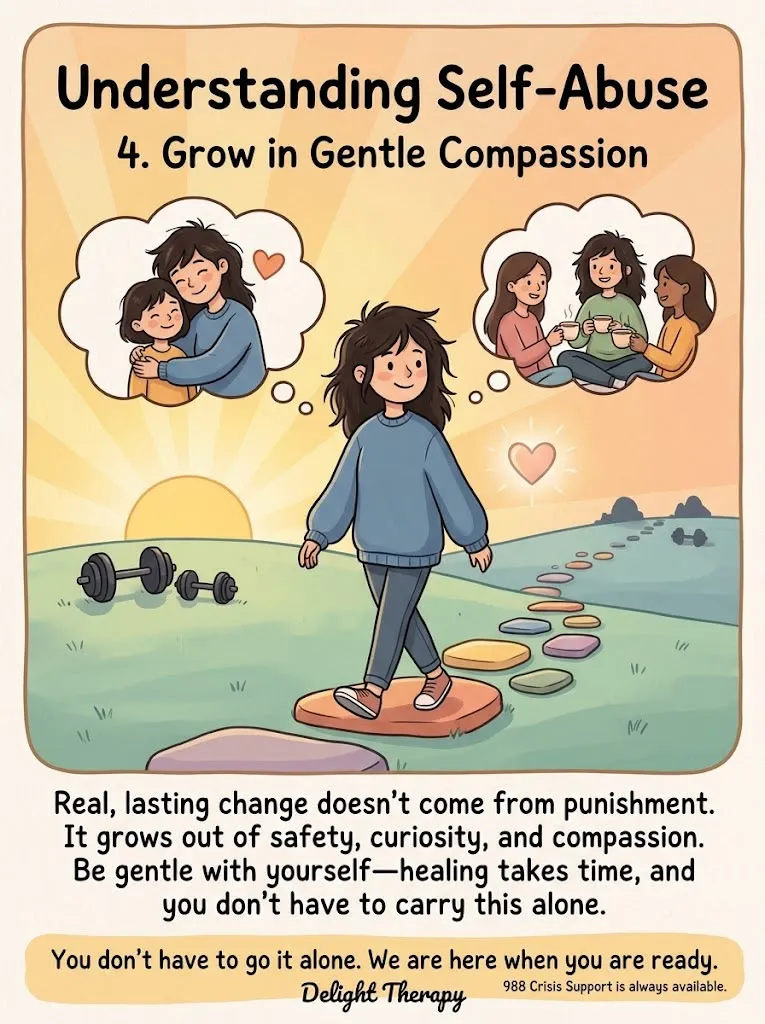
Many of us learned, directly or indirectly, that being hard on ourselves is the only way to stay motivated, safe, or worthy. In reality, shame and self-punishment keep us stuck in the very cycles we’re trying to escape. Lasting change grows from safety, curiosity, and compassion.
You don’t have to do this alone, and you don’t need to hit a breaking point before asking for support. If you see yourself in these patterns and want a safe, non-judgmental space to work through them at your own pace, therapy can help. Reach out whenever you’re ready, and we’ll take it one step at a time.
FAQs
What is self-abuse in simple words?
Self-abuse means repeatedly treating yourself in ways that harm your mental, emotional, or physical wellbeing. That includes harsh self-criticism, overworking, neglecting your needs, and self-harm.
Is self-abuse the same as self-harm?
Not exactly. Self-harm is one form of self-abuse. Self-abuse is a wider term that also covers emotional and behavioural patterns, like negative self-talk, burnout, and isolation.
Can self-abuse be healed?
Yes. With self-awareness, small boundaries, supportive people, and professional help like therapy, these patterns can change step by step.
When should I seek professional help?
If these patterns affect your daily life, relationships, or safety, or if you’ve been struggling for a while, a therapist can help you work through them safely.
If you or someone you know is in immediate crisis or struggling with active self-harm, please contact local crisis support services, or call or text 988 in Canada and the US for free, confidential 24/7 support.